

- Berichten: 3361
HiFi, Audio apparatuur en verwante zaken.
Ik HAAT het wanneer mensen denken dat ze ergens wat van afweten!
26 feb 2019 08:52 - 26 feb 2019 11:54 #76273
door RR1957
De test is uiteraard onderzocht/uitgeprobeerd en bewezen door anderen.
Ik ben van mening dat het klopt en hoef het niet uit te testen op mijn Lenco L70.
De 'lap tekst' is uiteraard gebaseerd op Lenco zelf.
Of zouden de auteurs een erg mooi verhaal uit hun duim hebben gezogen... Kan uiteraard ook.
Ongetwijfeld zal de veer wat -zeer lichte- extra druk geven, maar dat is niet bedoeld om het
wiel stevig tegen de draaischijf aan te drukken, zoals bijvoorbeeld bij de Garrards of andere
spelers met een aandrijfwiel. Primair is het principe zoals op het tekeningetje en zorgt het wiel
door zijn positie zelf voor de juiste aandrukkracht.
1 (één) exemplaar , er kan van alles aan mankeren waardoor het testje niet werkt.
Nogal 'wetenschappelijk'....
Wie zegt dat dit ene exemplaar werkelijk tip-top in orde is.... (maar toch prima werkt).
Retorische vraag uiteraard.
Wellicht kan Jaap Pees uitkomst bieden, de enige in NL die echt wetenschappelijk met vintage
aandrijfsystemen met een aandrijfwiel bezig is. En die werkt echt niet met een huishoudelastiekje.
Groet
Vriendelijke groet, RenéR
Als je naald maar goed is
Beantwoord door RR1957 in topic Ik HAAT het wanneer mensen denken dat ze ergens wat van afweten!
PE9ZZ schreef : Heb je die test zelf ook uitgevoerd? Ik kan ook wel een lap tekst kopieren maar op zich zegt dat niet zoveel. Ik denk dat als ik Bert's test repliceer ik op hetzelfde zal uitkomen. Vandaar m'n opmerking over wetenschappelijk verantwoord.
De test is uiteraard onderzocht/uitgeprobeerd en bewezen door anderen.
Ik ben van mening dat het klopt en hoef het niet uit te testen op mijn Lenco L70.
De 'lap tekst' is uiteraard gebaseerd op Lenco zelf.
Of zouden de auteurs een erg mooi verhaal uit hun duim hebben gezogen... Kan uiteraard ook.
Ongetwijfeld zal de veer wat -zeer lichte- extra druk geven, maar dat is niet bedoeld om het
wiel stevig tegen de draaischijf aan te drukken, zoals bijvoorbeeld bij de Garrards of andere
spelers met een aandrijfwiel. Primair is het principe zoals op het tekeningetje en zorgt het wiel
door zijn positie zelf voor de juiste aandrukkracht.
1 (één) exemplaar , er kan van alles aan mankeren waardoor het testje niet werkt.
Nogal 'wetenschappelijk'....
Wie zegt dat dit ene exemplaar werkelijk tip-top in orde is.... (maar toch prima werkt).
Retorische vraag uiteraard.
Wellicht kan Jaap Pees uitkomst bieden, de enige in NL die echt wetenschappelijk met vintage
aandrijfsystemen met een aandrijfwiel bezig is. En die werkt echt niet met een huishoudelastiekje.
Groet
Vriendelijke groet, RenéR
Als je naald maar goed is
Laatst bewerkt 26 feb 2019 11:54 door RR1957.
Graag Inloggen of een account aanmaken deelnemen aan het gesprek.

26 feb 2019 08:35 #76272
door PE9ZZ
Tjerk, 9ZZ
Beantwoord door PE9ZZ in topic Ik HAAT het wanneer mensen denken dat ze ergens wat van afweten!
Heb je die test zelf ook uitgevoerd? Ik kan ook wel een lap tekst kopieren maar op zich zegt dat niet zoveel. Ik denk dat als ik Bert's test repliceer ik op hetzelfde zal uitkomen. Vandaar m'n opmerking over wetenschappelijk verantwoord.
Tjerk, 9ZZ
De volgende gebruiker (s) zei dank u: RR1957
Graag Inloggen of een account aanmaken deelnemen aan het gesprek.
26 feb 2019 08:06 - 26 feb 2019 08:36 #76270
door RR1957
Vriendelijke groet, RenéR
Als je naald maar goed is
Beantwoord door RR1957 in topic Ik HAAT het wanneer mensen denken dat ze ergens wat van afweten!
Bert Kn schreef : Als ik hem in positie breng zonder draaiplateau staat er nog spanning op de originele veer welke groter wordt als je het draaiplateau wat het wiel naar beneden drukt plaatst.
Bij wijze van proef heb ik zojuist een elastiekje met minder spanning gebruikt welke het wiel keurig in positie brengt en laat draaien zonder draaiplateau.
Als ik dan het draaiplateau plaats weigert hij te draaien.
Ik kan daar maar een conclusie uit trekken hij heeft dat beetje extra spanning nodig om het draaiplateau te laten draaien.
/quote]
Dan is er toch iets niet in orde met je enkele proefje en exemplaar (en een elastiekje....).
Maar waarschijnlijk weet jij het beter dan Lenco zelf. Daarnaast zijn talloze liefhebbers
die het systeem gebruikt hebben voor de meest optimale platenspelers, al dan niet met
veel high tech zelfbouw, op het verkeerde been zijn gezet.
Maar goed, er kan natuurlijk iets niet in orde zijn aan één exemplaar.
Bijvoorbeeld de ophangveren van de motor, want die zijn een essentieel onderdeel
van het principe. Of een kleine verbuiging. Enzovoorts. Enzovoorts.
The Lenco drive system is really a lot niftier then we think.
The short version of this story is:
If it won’t start, lower the motor nose a bit.
If it has an abrupt, loud, jerky start, raise the motor nose a bit.
The idler arm spring is not the real problem, the motor position is.
A jerky start can sometimes also be remedied by adjusting the power switch position, such that the motor only starts after the idler wheel makes contact.
For those of us with a mechanical interest, here is the full story:
Why doesn't my platter turn ? my motor is running fine
Why does my platter only start on 78 rpm ??
Why do I hear the motor springs move when I switch on?
The poor idler arm spring is blamed for almost all Lenco idler drive problems.
Most of the time, putting in a stronger spring solves the problem in the sense that it works after that, but that is not the whole story.
This little spring is not supposed to provide the force needed to prevent “slippage” between the motor shaft (or the platter) and the idler wheel.
The motor springs are supposed to provide that force.
If that statement seems nonsensical, let’s look at how the Lenco design works, it’s quite clever:
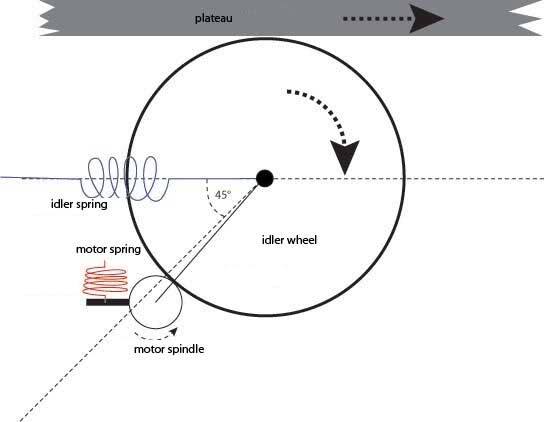
So, how does it work?
Upon switch-on, the motor starts turning, and the idler arm spring gently pulls the idler wheel into contact with the platter and the motor shaft.
Now, one of two things will happen, depending on where the motor shaft makes contact with the idler wheel. This "point of engagement" is the key. As you can see from the drawing, The distance between the platter and the motor shaft, as well as the diameter of the idler wheel determine where that point is.
A) The point of engagement is on or above the 45 degree line in the drawing.
In this case, the idler wheel will turn with the motor, but it will not drive the platter, it will slip there. IT DOESN’T WORK!. Twisted Evil
The point of engagement is below the 45 degree line.
This is the situation in the drawing. Now, magic happens.
The idler wheel pulls itself tightly in between the platter and the motor shaft, pushing the motor down a bit in the process, and gets a 4 kg plateau up to speed in no time.
IT WORKS! Dancing
When you think about it, it takes a lot of energy to get that heavy plateau started, and thus we need to have a lot of friction between the idler wheel and the motor/platter. The little idler arm spring is in no way powerful enough to provide enough force to cause that much friction. So this is not how it works.
The lenco mechanism is a nice example of a “grabbing” or "self-locking" mechanism, much like that employed in those machines that shoot tennis balls at you (or baseballs on this side of the ocean). If the motor was powerful enough, and could move downward far enough, it would actually throw the idler wheel right to the other side of the motor shaft. Shocked
(Try feeding wood into a table saw the wrong way.... same thing)
Any friction between the motor and the wheel would try to rotate the wheel. Friction between the platter and a wheel which is trying to rotate would try to push the wheel to the left. If the wheel moves to the left a bit, it also pushes the motor down a bit, in against the motor spring. This increases the friction at the motor and at the plateau, which causes more rotation, which causes more force to the left, which…. Well, you get it. Both frictions amplify each other, we have the mechanical equivalent of the famous feedback howl. The wheel will dig itself in, pushing the motor down as far as it needs to in order to maintain contact with both the shaft and the platter. Nifty, isn’t it?
What is missing in the above scenario if the point of engagement is too high is an UPWARD component to the force on the idler wheel. The wheel is not pushed up against the platter, and that is exactly why it slips there.
The 45 degree line is magical, because that is where the wheel can start "swinging around" the motor shaft without having to push the motor down first. (there must be better way to explain that, but I can't think of one right now..)
So.. basically, the force to counteract the friction is supplied by the motor springs. They are not there merely to kill vibrations, they are an essential part of the drive system’s friction regulation mechanism. The little idler arm spring is only a catalyst, once the drive has “engaged”, you can take it out completely, the platter will keep on turning.
The motor position will adjust to the amount of force needed to drive the plateau, is another way of putting it.
Now that we understand how it works, let's look at the motor.
The first thing to note is that the motor shaft is tapered, which means a different point of engagement at different rpm settings, unless the motor is angled upwards a bit in order to compensate for this. (which it is, or should be). If it will only start on 78 rpm, that’s the difference..
The only real variable in positioning the motor are the nose springs. Lenco has gone through a few different lengths and strength of these springs. Now that we know the symptoms of an incorrect position, we can experiment to get it right.
Ideally, you want the engagement point to be just below that magical 45 degree line. That will make for a nice, smooth start.
If the motor hangs too low, there will be too much initial upwards force, which gives an abrupt, jerky start, with a lot of (audible) motor movement.
If there is a difference in start up behaviour at different speeds, the motor's upward angle is not optimal.
Of course, if the motor is not running yet when the idler wheel makes contact with it, the start will always be smooth, regardless of the point of engagement.
On some models, it is possible to adjust the position of the power switch, such that power is only applied to the motor after the idler wheel makes contact.
Why does a stronger idler arm spring help? A stronger spring gives enough starting friction to help get the motor below that magical line, where it should have been already.
And finally, a note for those who swap a 50 hz motor for a 60 hz one:
Because the diameter of the shafts is different, the point of engagement will shift, and you may have to tinker with the nose springs a bit.
And another thing.... I have seen some Lencos with bent idler arms, perhaps because someone has tried to solve a start up problem. The idler wheel should be plumb vertical, and at a tangent to the platter, much like the cantilever to the record.
Text by Sander
Illustration by Trond
Hier laat ik het bij.

Vriendelijke groet, RenéR
Als je naald maar goed is
Laatst bewerkt 26 feb 2019 08:36 door RR1957.
Graag Inloggen of een account aanmaken deelnemen aan het gesprek.
26 feb 2019 06:52 #76269
door PE9ZZ
Tjerk, 9ZZ
Beantwoord door PE9ZZ in topic Ik HAAT het wanneer mensen denken dat ze ergens wat van afweten!
Mooie wetenschappelijk verantwoorde onderbouwing! Nu weet ik ook meteen wat ik moet doen mocht het ding ooit mijn kant opkomen :lol:
Tjerk, 9ZZ
Graag Inloggen of een account aanmaken deelnemen aan het gesprek.

26 feb 2019 00:44 - 26 feb 2019 01:20 #76268
door Bert Kn
Mvg.
Bert
Beantwoord door Bert Kn in topic Ik HAAT het wanneer mensen denken dat ze ergens wat van afweten!
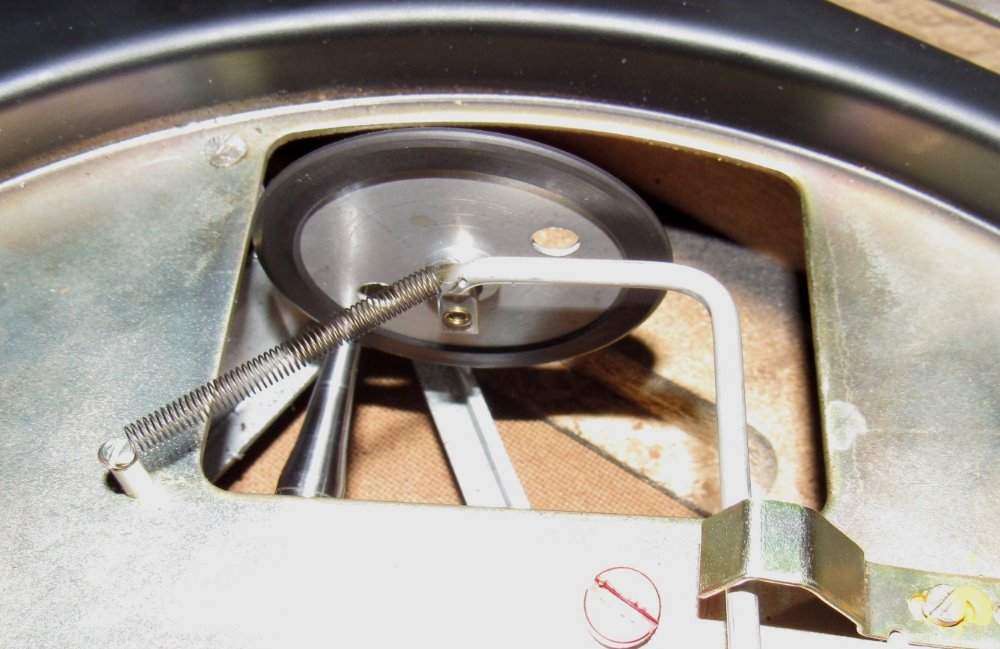
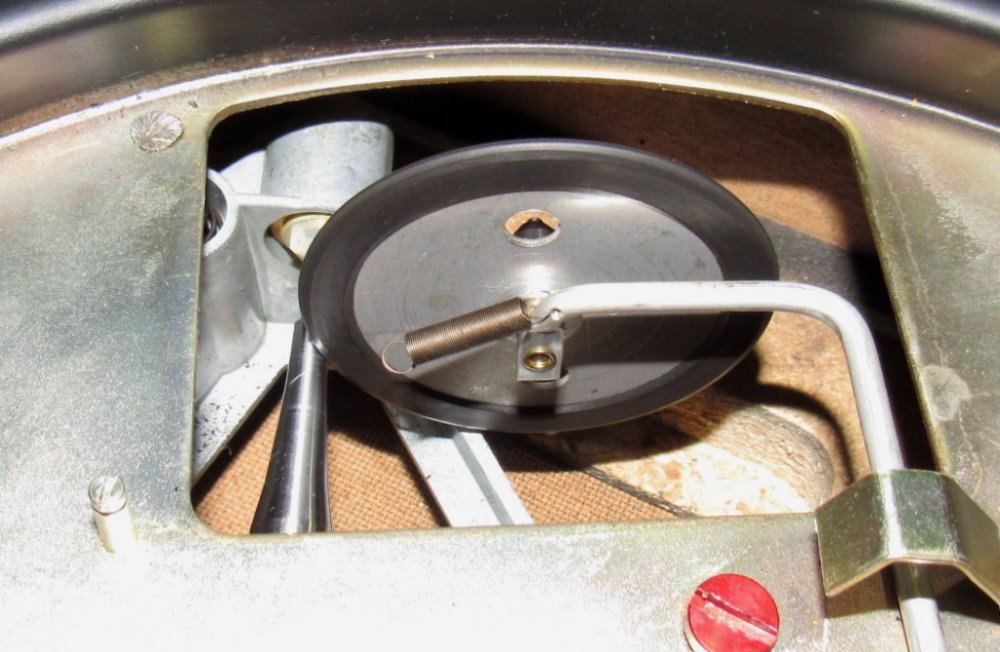
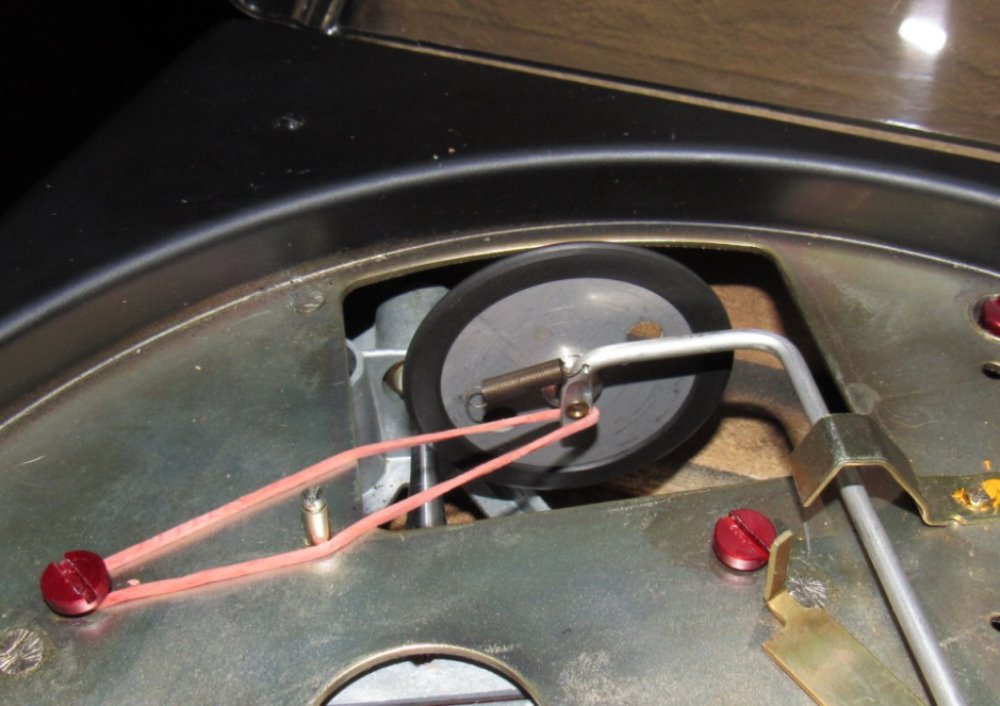
Als ik hem in positie breng zonder draaiplateau staat er nog spanning op de originele veer welke groter wordt als je het draaiplateau wat het wiel naar beneden drukt plaatst.
Bij wijze van proef heb ik zojuist een elastiekje met minder spanning gebruikt welke het wiel keurig in positie brengt en laat draaien zonder draaiplateau.
Als ik dan het draaiplateau plaats weigert hij te draaien.
Ik kan daar maar een conclusie uit trekken hij heeft dat beetje extra spanning nodig om het draaiplateau te laten draaien.
@ Cees,
Mijn Lenco L76/S heeft fabriek af zo een Jelco tone arm.
Bevalt me uitstekend maar vlak die rechte armen ook niet uit. :woohoo:
Bij wijze van proef heb ik zojuist een elastiekje met minder spanning gebruikt welke het wiel keurig in positie brengt en laat draaien zonder draaiplateau.
Als ik dan het draaiplateau plaats weigert hij te draaien.
Ik kan daar maar een conclusie uit trekken hij heeft dat beetje extra spanning nodig om het draaiplateau te laten draaien.
@ Cees,
Mijn Lenco L76/S heeft fabriek af zo een Jelco tone arm.
Bevalt me uitstekend maar vlak die rechte armen ook niet uit. :woohoo:
Mvg.
Bert
Laatst bewerkt 26 feb 2019 01:20 door Bert Kn.
De volgende gebruiker (s) zei dank u: PE9ZZ, Cees PA1DBA
Graag Inloggen of een account aanmaken deelnemen aan het gesprek.
25 feb 2019 23:47 #76267
door RR1957
Vriendelijke groet, RenéR
Als je naald maar goed is
Beantwoord door RR1957 in topic Ik HAAT het wanneer mensen denken dat ze ergens wat van afweten!
Heel juist en er zijn fraaie metalen aandrijfwielen te vinden.
Het is bijna een wetenschap onder de Lenco liefhebbers geworden.
Het is bijna een wetenschap onder de Lenco liefhebbers geworden.
Vriendelijke groet, RenéR
Als je naald maar goed is
Graag Inloggen of een account aanmaken deelnemen aan het gesprek.