

- Berichten: 3361
Historie
RCA 45
05 feb 2019 13:14 #76045
door RR1957
Vriendelijke groet, RenéR
Als je naald maar goed is
Blijft ook nog de issue waarom Philips in 1950 met de
'mislukte' 78 toeren vinyl plaatjes op het label Minigroove kwam.
Reden wordt altijd genoemd dat de vroege lichtgewicht pick-ups
nog geen 78 toeren instelling hadden en Philips daarmee met die
plaatjes een gat vulde, of wilde concurreren met de 45 toeren plaatjes.
Dat blijkt niet helemaal zo te zijn.
Columbia kwam in 1949 al met vinyl 78 toeren plaatjes van 7" en
Philips volgde de Columbia lijn trouw zeg maar. Ze gingen immers
ook een samenwerkingsverband aan wat betreft uitwisseling van
opnames naar elkaar.
Een correspondent van me verwacht binnenkort een voorraadje
78 toeren vinylplaatjes van Columbia uit Amerika. Hij is bezig met
een site over de opkomst van de vinylplaat.
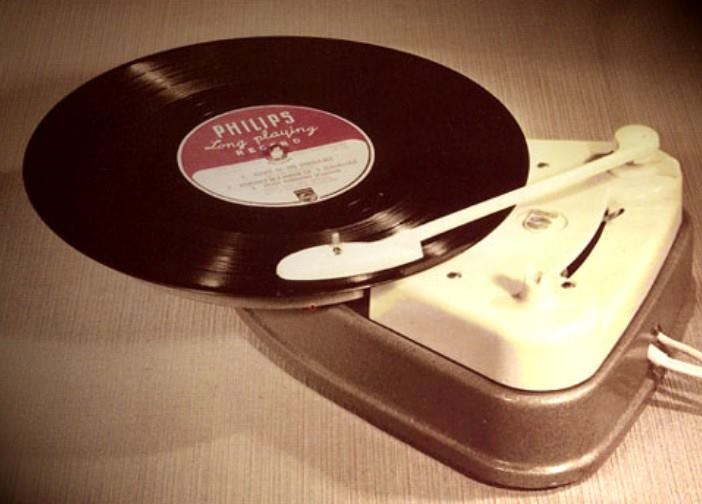
Op de ingekleurde foto van een Philips speler een (10") plaat met nog
het testlabel op deze plaat. De eerste vinyl 78 toeren plaatjes hadden
die ook. In de handel werd het uiteraard die met het Minigroove label.
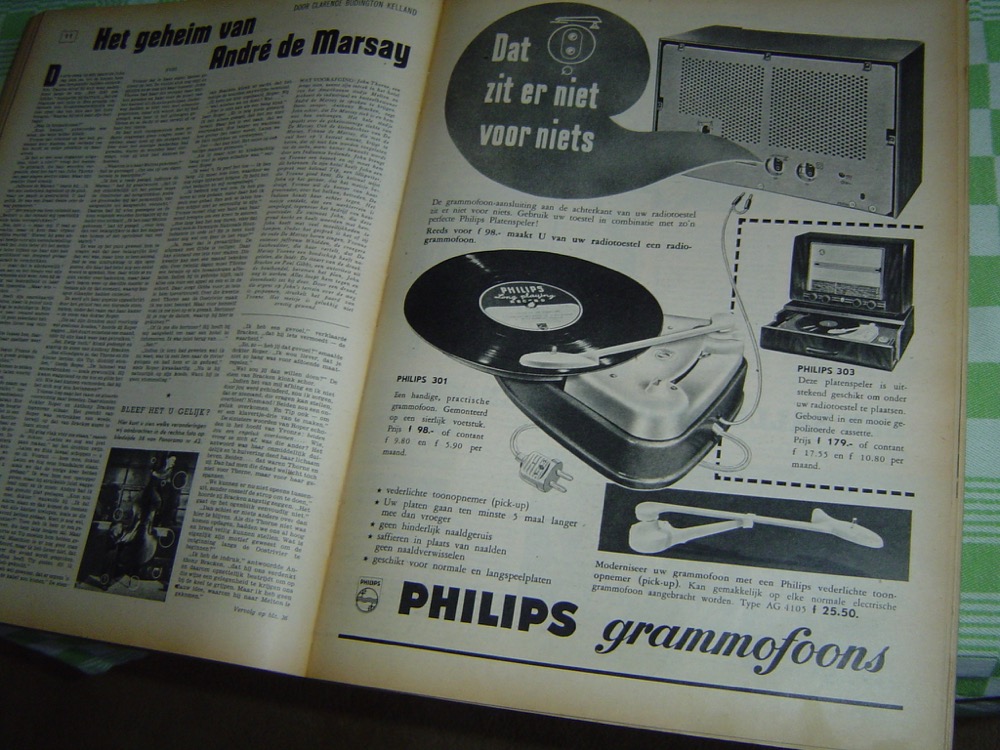
Ook in vroege advertenties van Philips zie je dit test-label op de plaat
nog in beeld.
'mislukte' 78 toeren vinyl plaatjes op het label Minigroove kwam.
Reden wordt altijd genoemd dat de vroege lichtgewicht pick-ups
nog geen 78 toeren instelling hadden en Philips daarmee met die
plaatjes een gat vulde, of wilde concurreren met de 45 toeren plaatjes.
Dat blijkt niet helemaal zo te zijn.
Columbia kwam in 1949 al met vinyl 78 toeren plaatjes van 7" en
Philips volgde de Columbia lijn trouw zeg maar. Ze gingen immers
ook een samenwerkingsverband aan wat betreft uitwisseling van
opnames naar elkaar.
Een correspondent van me verwacht binnenkort een voorraadje
78 toeren vinylplaatjes van Columbia uit Amerika. Hij is bezig met
een site over de opkomst van de vinylplaat.
Op de ingekleurde foto van een Philips speler een (10") plaat met nog
het testlabel op deze plaat. De eerste vinyl 78 toeren plaatjes hadden
die ook. In de handel werd het uiteraard die met het Minigroove label.
Ook in vroege advertenties van Philips zie je dit test-label op de plaat
nog in beeld.
Vriendelijke groet, RenéR
Als je naald maar goed is
Graag Inloggen of een account aanmaken deelnemen aan het gesprek.
04 feb 2019 22:48 #76041
door RR1957
Vriendelijke groet, RenéR
Als je naald maar goed is
Een bericht van de RCA groep.
Happy Birthday to the 45 Single developed by RCA!
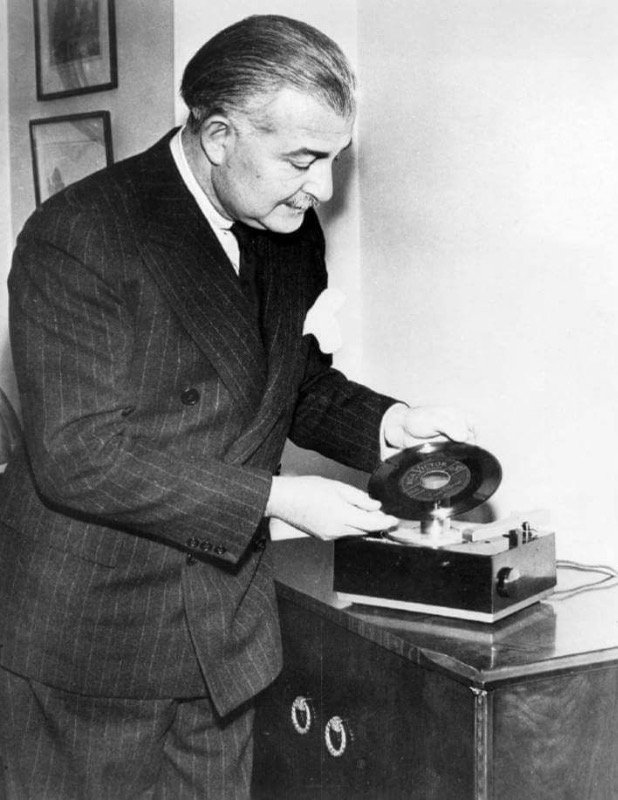
It was on this date, 70 years ago, that RCA Victor invented the 45 RPM record. Shown in the photo below is Maestro Arthur Fiedler. Here is a bit of history and a wee bit of science on why the 45 is designed the way it is.
On this day in 1949 RCA issued the first 45 rpm record. It changed how people listened to music and created the era of the jukebox! That is Boston Pops Conductor Arthur Fiedler testing the new music format.
Interesting that this format also ushered in the "EP" 45....it had two tracks per side. Special techniques in mastering had to be done to fit two 3 minute sings per side.....Today, contemporary artists, mostly indie pop artists still issue EPs but digitally on iTunes or Amazon Music where 4 songs are considered an "EP".
Here is a fundamental question that every vinyl lover has asked: why is the hole of a 7-inch single so big?
For the first fifty years of the turntable’s existence, the spindle on which you placed the record was a standard size: approximately .283 inches. That was also the size of the hole drilled into all records.
When Columbia Records introduced the 33 1/3 RPM long-playing album in 1948, they kept the hole in the center the same size. However, Columbia’s archrival, RCA, was most annoyed at this new format. Rather than license Columbia’s technology for their releases, RCA introduced their own new record, the 7-inch single that spun at 45 RPM and had a center hole that measured 1.5 inches in diameter.
Why would they do something like that? Two reasons.
While the LP promised up to 22 minutes of uninterrupted music per side, RCA’s crowed that their 45s could be stacked on the special tall, fat spindle—about 6 inches high—that was exclusive to RCA-manufactured turntables. Once a side of a 45 finished playing after five or six minutes, the tone arm moved away long enough for the next record to drop down onto the platter. The tone arm then swung back into place and the music would continue. With the ability to stack up to ten 45s on the RCA spindle, it was theoretically possible for the music to continue for a full hour without human intervention.
RCA wanted their new format to crush Columbia’s LPs, so they began selling turntables that could only play 45s. The thinking was that once someone bought one of these turntables with the fat spindles, they were theoretically locked into buying music in that format from then on. It was just like the future VHS/Beta and Blu-ray/HD-Video wars.
45
But there was a more scientific reason for the larger hole. When a new 45 dropped from the spindle onto the turntable, it was required to spin up from a dead stop to 45 RPM very quickly. This torque tended to cause the small holes to go out-of-round very quickly, causing record to wobble as it spun. The larger hole allowed the sudden rotational force to be distributed over a longer path—pi x 1.5 = about 4.712 inches—reducing wear and allowing the hole to stay round longer.
commercial
Happy Birthday to the 45 Single developed by RCA!
It was on this date, 70 years ago, that RCA Victor invented the 45 RPM record. Shown in the photo below is Maestro Arthur Fiedler. Here is a bit of history and a wee bit of science on why the 45 is designed the way it is.
On this day in 1949 RCA issued the first 45 rpm record. It changed how people listened to music and created the era of the jukebox! That is Boston Pops Conductor Arthur Fiedler testing the new music format.
Interesting that this format also ushered in the "EP" 45....it had two tracks per side. Special techniques in mastering had to be done to fit two 3 minute sings per side.....Today, contemporary artists, mostly indie pop artists still issue EPs but digitally on iTunes or Amazon Music where 4 songs are considered an "EP".
Here is a fundamental question that every vinyl lover has asked: why is the hole of a 7-inch single so big?
For the first fifty years of the turntable’s existence, the spindle on which you placed the record was a standard size: approximately .283 inches. That was also the size of the hole drilled into all records.
When Columbia Records introduced the 33 1/3 RPM long-playing album in 1948, they kept the hole in the center the same size. However, Columbia’s archrival, RCA, was most annoyed at this new format. Rather than license Columbia’s technology for their releases, RCA introduced their own new record, the 7-inch single that spun at 45 RPM and had a center hole that measured 1.5 inches in diameter.
Why would they do something like that? Two reasons.
While the LP promised up to 22 minutes of uninterrupted music per side, RCA’s crowed that their 45s could be stacked on the special tall, fat spindle—about 6 inches high—that was exclusive to RCA-manufactured turntables. Once a side of a 45 finished playing after five or six minutes, the tone arm moved away long enough for the next record to drop down onto the platter. The tone arm then swung back into place and the music would continue. With the ability to stack up to ten 45s on the RCA spindle, it was theoretically possible for the music to continue for a full hour without human intervention.
RCA wanted their new format to crush Columbia’s LPs, so they began selling turntables that could only play 45s. The thinking was that once someone bought one of these turntables with the fat spindles, they were theoretically locked into buying music in that format from then on. It was just like the future VHS/Beta and Blu-ray/HD-Video wars.
45
But there was a more scientific reason for the larger hole. When a new 45 dropped from the spindle onto the turntable, it was required to spin up from a dead stop to 45 RPM very quickly. This torque tended to cause the small holes to go out-of-round very quickly, causing record to wobble as it spun. The larger hole allowed the sudden rotational force to be distributed over a longer path—pi x 1.5 = about 4.712 inches—reducing wear and allowing the hole to stay round longer.
commercial
Vriendelijke groet, RenéR
Als je naald maar goed is
Graag Inloggen of een account aanmaken deelnemen aan het gesprek.